Decentralized Mesh Network Peer
Resilient peer-to-peer server connections forming a decentralized mesh network.
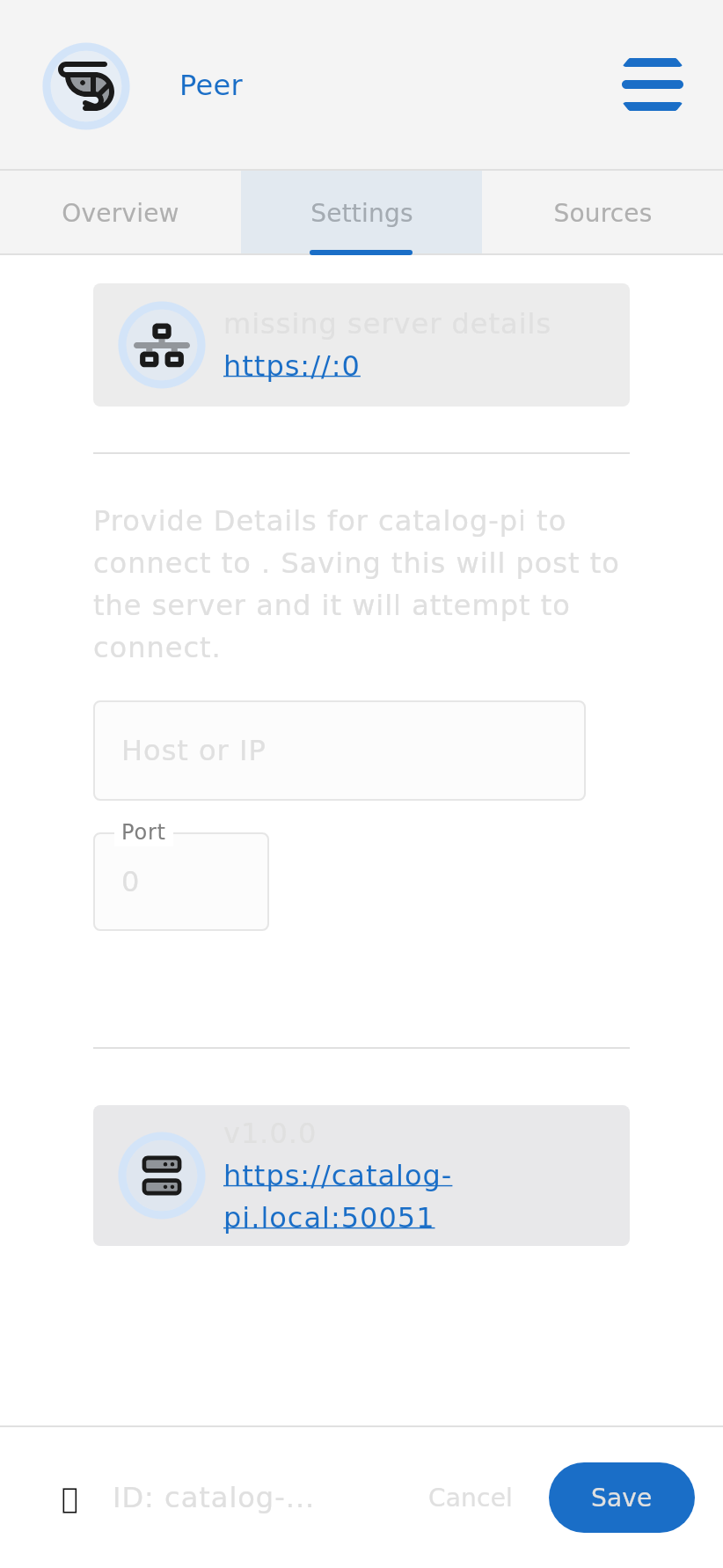
The Krill Platform is designed as a resilient peer-to-peer network swarm of servers. Each server in the mesh network connects to other servers, known as Peers, to share data and resources. This decentralized architecture enhances reliability, scalability, and fault tolerance, ensuring that the network remains operational even if individual servers go offline.
Overview
Peers represent the connections between Krill servers on your local network. Unlike External Servers that require manual configuration, Peers are automatically discovered through beacon broadcasting. This creates a self-organizing mesh where servers find and connect to each other without user intervention.
Key Features
- Auto-Discovery: Servers automatically discover peers on local network via UDP beacons
- Cluster PIN Trust: All servers sharing the same 4-digit cluster PIN automatically trust each other – no manual key exchange required
- Beacon Broadcasting: UDP beacon system for server announcement, including a rolling TOTP cluster token for membership validation
- Decentralized Architecture: No single point of failure
- Data Synchronization: Share node states across the mesh
- Workload Distribution: Distribute processing across servers
- Fault Tolerance: Network continues if servers go offline
- Reconnection: Peers re-establish SSE connections when servers return (fully automatic mesh self-healing is on the roadmap)
- Real-Time Updates: SSE (Server-Sent Events) based state synchronization
Mesh Network Architecture
graph TD
    subgraph "Local Network Mesh"
        A[Krill Server A] <-->|Peer Connection| B[Krill Server B]
        B <-->|Peer Connection| C[Krill Server C]
        A <-->|Peer Connection| C
        A <-->|Peer Connection| D[Krill Server D]
        C <-->|Peer Connection| D
    end

    E[Client App] -->|Connect| A
    E -->|Connect| B
    E -->|Connect| C
    E -->|Connect| D

    F[Beacon UDP] -.->|Discovery| A
    F -.->|Discovery| B
    F -.->|Discovery| C
    F -.->|Discovery| D
How Peer Discovery Works
The peer discovery and trust process is fully automated when servers share a cluster PIN:
- Beacon Broadcast: Each server broadcasts UDP beacons on the local network (multicast group
239.255.0.69, port45317, TTL=1). Beacons include a rolling TOTP cluster token derived from the shared PIN. - Beacon Validation: Receiving servers validate the cluster token in the beacon to confirm the sender belongs to the same cluster.
- Certificate Download: Server downloads the peer’s self-signed certificate via
GET /trust(TOFU model, only after beacon validation confirms cluster membership). - Health Check: Server verifies connectivity with
GET /healthusing the shared PIN-derived Bearer token. - SSE Connection: Servers establish SSE (Server-Sent Events) streams using the shared PIN-derived Bearer token for real-time node state synchronization.
- Auto-Reconnect: Lost connections are automatically re-established on the next beacon cycle.
All servers in a cluster derive the same Bearer token from the same PIN via PBKDF2. No key exchange or handshake is needed – cluster membership is validated by the beacon’s rolling TOTP token, and ongoing authentication uses the shared derived Bearer token.
Peer Communication Flow
sequenceDiagram
    participant A as Server A
    participant B as Server B

    A->>B: UDP Beacon (with rolling TOTP cluster token)
    B->>A: UDP Beacon (with rolling TOTP cluster token)
    Note over A,B: Both validate cluster tokens
    A->>B: GET /trust (download certificate)
    B-->>A: Self-signed certificate
    A->>B: GET /health (Bearer: PIN-derived token)
    B-->>A: 200 OK
    Note over A,B: Both servers share the same PIN-derived Bearer token
    A->>B: SSE /sse (Bearer: PIN-derived token)
    B->>A: SSE /sse (Bearer: PIN-derived token)
    Note over A,B: Real-time node state sync via SSE
Peer Metadata
Each peer connection maintains metadata about the remote server:
| Field | Description |
|---|---|
name | Server hostname |
port | Server communication port |
model | Hardware model (Raspberry Pi, etc.) |
version | Krill Server version |
os | Operating system |
platform | Platform type (LINUX, WINDOWS, MAC) |
Cluster PIN
The cluster PIN is a 4-digit numeric code shared across all servers and clients in a Krill cluster. It is the single source of trust for the entire mesh.
Credential Files: /etc/krill/credentials/pin_hash and /etc/krill/credentials/pin_derived_key
| Property | Value |
|---|---|
| Format | 4-digit numeric code |
| Derived Token | PBKDF2 with cluster-specific salt |
| Beacon Token | Rolling TOTP derived from PIN |
| Permissions | 0400 (read-only) |
| Set During | apt install krill (installer prompt) or app FTUE |
Setup for multiple servers:
1
2
3
4
5
# During installation of each server, enter the same 4-digit PIN
# when prompted by the Debian installer.

# To reset the PIN on an existing server:
sudo krill-reset-pin
Use Cases
- Home Automation: Multiple Raspberry Pi servers throughout the house
- Lab Monitoring: Distributed sensors across a facility
- Redundancy: Multiple servers for critical automation
- Scalability: Add servers as your needs grow
- Load Distribution: Spread data collection across devices
- Geographic Distribution: Servers in different rooms/areas
- Edge Computing: Process data close to sensors
Benefits of Mesh Architecture
Reliability:
- No single point of failure
- Network continues if servers go offline
- Automatic reconnection when servers return
Scalability:
- Add servers without reconfiguration
- Linear scaling with additional nodes
- No central bottleneck
Performance:
- Local processing reduces latency
- Distributed workload
- Efficient resource utilization
Simplicity:
- Enter the same 4-digit PIN on each server during install
- Auto-discovery eliminates manual setup
- Self-organizing network
Fault Tolerance
When a server goes offline:
graph TD
    A[Server Offline Detected] --> B[Mark Peer as Disconnected]
    B --> C[Remove from Active Sessions]
    C --> D[Continue with Remaining Peers]
    D --> E{Server Returns?}
    E -->|Yes| F[Beacon Detected]
    F --> G[Re-establish Connection]
    G --> H[Sync State Changes]
    E -->|No| I[Wait for Beacon]
    I --> E
Cross-Server Data Flow
Peers enable powerful cross-server automation:
Example: Distributed Temperature Monitoring
1
2
3
4
5
6
7
8
9
10
11
12
Server A (Living Room)
  └─> Temperature Data Point
      └─> Updates synced to peers

Server B (Bedroom)
  └─> Receives temp update from Server A
      └─> Trigger: High Threshold
          └─> Executor: Control local AC

Server C (Central)
  └─> Compute: Average all room temperatures
      └─> OutgoingWebHook: Dashboard update
Integration with SourceMetaData
Executors with SourceMetaData can target Data Points on any peer:
- Calculation: Read from Server A, write to Server B
- Compute: Aggregate data from multiple servers
- Logic Gates: Inputs from different servers
Session Management
The PeerSessionManager handles all peer connections:
- Session Tracking: Maintains list of active sessions
- TTL Cleanup: Removes expired/inactive sessions
- Connection Health: Monitors heartbeats and connection state
- Reconnection: Handles automatic reconnection logic
Best Practices
- Network Stability: Use reliable local network infrastructure
- Consistent Versions: Keep all servers on same Krill version
- PIN Security: Choose a non-obvious PIN and reset it if compromised
- Resource Planning: Consider CPU/memory across distributed load
- Monitoring: Monitor peer connection health
- Backup Strategy: Plan for server maintenance windows
Comparison: Peer vs External Server
| Feature | Peer | External Server |
|---|---|---|
| Discovery | Automatic (beacon) | Manual configuration |
| Network | Local network only | Any network/internet |
| Latency | Very low | Variable (network dependent) |
| Setup | Same cluster PIN | Requires address and PIN |
| Trust | Beacon TOTP + shared PIN-derived token | PIN-derived Bearer token |
Troubleshooting
| Issue | Cause | Solution |
|---|---|---|
| No peers discovered | Firewall blocking UDP | Open beacon port |
| Intermittent connections | Network congestion | Check network health |
| Sync delays | High latency | Verify network performance |
| Authentication failures | Mismatched cluster PIN | Verify all servers use the same PIN; reset with krill-reset-pin |
| Beacon not validated | Wrong PIN on one server | Re-enter correct PIN on the misconfigured server |
Network Requirements
- UDP Port: Open for beacon broadcasts (discovery)
- TCP Port: Open for HTTPS connections (data)
- Same Subnet: Servers should be on same network subnet for discovery
- Low Latency: Local network recommended for real-time sync
The Decentralized Mesh Network architecture is the foundation of Krill’s resilient, scalable automation platform, enabling multiple servers to work together as a unified system.
Last verified: 2026-05-21